AIPAC Memo

Turkey is Not Acting Like a U.S. Ally

August 4, 2026
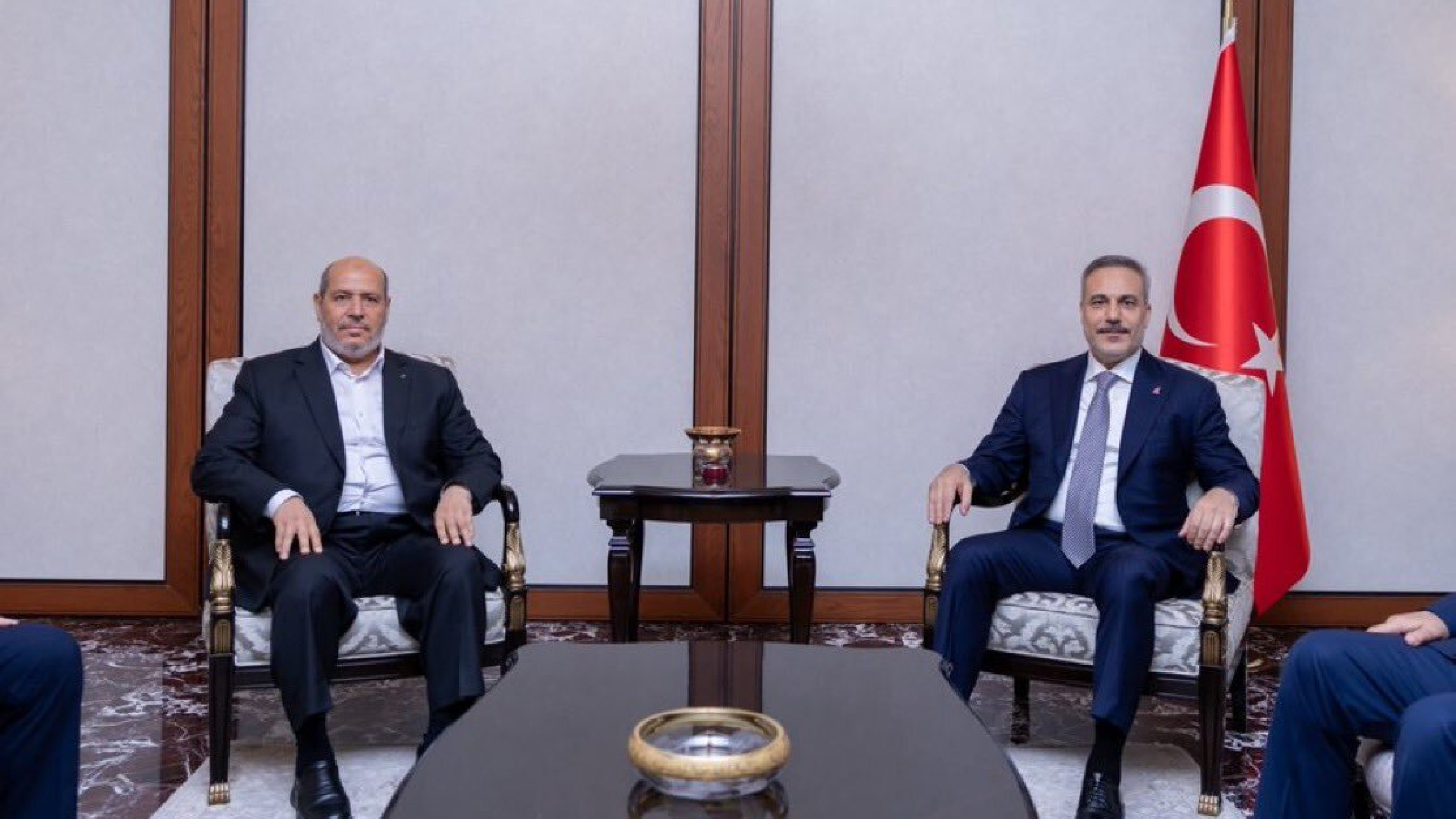
Pictured in July 2025, Turkish Foreign Minister Hakan Fidan met with Hamas terror leader Khalil al‑Hayya.
Pictured in July 2026, Turkish Foreign Minister Hakan Fidan met with Hamas terror leader Khalil al‑Hayya.

The Republic of Turkey under President Recep Tayyip Erdoğan is increasingly positioning itself as a threat to the interests of the United States and its allies in the Middle East and Europe. In recent years, Erdoğan has openly supported U.S. adversaries, including the Iranian regime and its terror proxies, while adopting a hostile posture toward U.S. allies such as Israel, Greece, and Cyprus. At the same time, Turkey has been rapidly building up its military capabilities and seeking to acquire advanced American weapons systems while engaging in domestic oppression.

The United States must ensure that our alliances advance American interests rather than undermine them. Unless and until Turkey fully complies with U.S. law, ceases threatening U.S. allies, and renounces its support for U.S. adversaries and terrorist organizations, Washington should not transfer F‑35 aircraft to Turkey.

Supporting America’s Enemies

  • Backing Iran Against America: After the United States launched Operation Epic Fury on February 28, 2026, President Erdoğan condemned the strikes, saying, “We deplore this morning’s attacks, which not only constitute a clear violation of Iran’s sovereignty but also target the peace and well‑being of the friendly and brotherly people of Iran,” and according to President Trump, Turkey even considered joining the war on Iran’s side.
  • Evading U.S. Sanctions on Iran: Turkish banks have helped Iran bypass American sanctions, providing an economic lifeline to Tehran.
  • Aligning with the Muslim Brotherhood: Erdoğan and his AK Party maintain close ideological and political ties with the Muslim Brotherhood, several of whose chapters have been designated by the U.S. government as Foreign Terrorist Organizations (FTOs).
  • Supporting Hamas: Turkey openly provides a safe haven for Hamas officials, refusing to shut down Hamas offices on Turkish soil or expel Hamas members, and significant funding for Hamas is channeled via Turkish financial institutions. Following the death of Hamas terrorist leader Ismail Haniyeh in 2024, Erdoğan denounced what he called the “perfidious assassination” of his “brother” and praised “the glorious Gazan resistance.”
  • Supporting Hezbollah: Like Hamas, a significant amount of Hezbollah’s funding is channeled via Turkish institutions, providing resources to a U.S.‑designated FTO that is responsible for the deaths of hundreds of Americans.
  • Aligning with Russia: In 2019, the United States removed Turkey from the F‑35 program after Ankara bought Russia’s S‑400 air‑defense system, a step that could enable Russia to compromise the aircraft’s advanced capabilities. U.S. law prohibits the transfer of F‑35 aircraft to Turkey until Ankara gives up the S‑400. Since Russia’s 2022 invasion of Ukraine, Turkey has also refused to impose sanctions on Russia and has aided Moscow’s efforts to bypass U.S. and international sanctions.
  • Strengthening Ties with China: Under Erdoğan, Ankara’s relations with Beijing have deepened; China is now Turkey’s second‑largest trading partner and its largest source of imports. Turkey’s collaboration with Chinese technology firms such as Huawei — which the United States has designated a national security threat — also raises serious concerns about Chinese espionage and intelligence‑gathering activity on Turkish soil.

Hostility Toward Israel and Other American Allies

  • Erdoğan Threatens Israel: Erdoğan has repeatedly called for Israel’s destruction. On March 30, 2025, he said “May Allah make Zionist Israel destroyed and devastated.” He also threatened to invade Israel on July 28, 2024, saying “Just like we entered Karabakh, just like we entered Libya, we might do similar to [Israel].”
  • Turkish Government Officials Echo Threats: Turkey’s Foreign Minister Hakan Fidan said on July 2, 2026, that Israel has become a “burden that humanity can no longer bear,” invoking antisemitic tropes and genocidal language. On June 6, 2026, Turkish Interior Minister Mustafa Çiftçi said that Jerusalem “will be ours once again.”
  • Threatening Israel from Syria: Turkey has also sought to establish a long‑term military presence in Syria, from which it could launch future attacks on Israel. Turkey maintains dozens of bases and forward operating posts in northern Syria and has sought to take control of a new air base further to the south. Ankara has also reportedly deployed an advanced radar system at Damascus International Airport, which could threaten Israeli air operations.
  • Opposing the Kurds: Turkey has fought, and seeks to dismantle, the Kurdish‑led SDF and YPG in northern Syria — U.S.‑backed forces that proved to be highly effective partners in the fight against ISIS. These Turkish offensives have killed civilians, displaced more than 100,000 people, and disrupted counter‑ISIS operations.
  • Threats Toward Greece: Erdoğan has also pursued a policy of aggression toward Greece, a fellow NATO member, by advancing revisionist maritime claims, encroaching on Greek sovereignty, and issuing explicit threats against Greece. In December 2022, Erdoğan warned that Turkish missiles could strike Athens.
  • Ongoing Occupation of Northern Cyprus: Turkey has also occupied more than one‑third of Cyprus since 1974. In recent decades, Turkish violations of human rights and the rule of law in the Turkish‑controlled northern part of Cyprus have increased significantly. Turkey has repeatedly disrupted Cypriot offshore energy exploration, including by deploying warships to physically block drilling ships from operating in Cyprus’ exclusive economic zone.

Domestic Repression

  • Democratic Backsliding: Political oppression under President Erdoğan has led to democratic backsliding and a drift toward authoritarianism, where his government frequently uses the courts to target political opponents. On March 19, 2025, Istanbul Mayor Ekrem İmamoğlu — a prominent rival and leading figure in the Republican People’s Party (CHP) — was arrested on politically motivated charges. On May 21, 2026, a Turkish appeals court ruled to remove CHP chair Özgür Özel and the entire elected party leadership.
  • Targeting Media and Activists: Erdoğan has systematically crushed independent media, with critics frequently facing intimidation and imprisonment on vague “terrorism” charges, while peaceful protests are routinely met with blanket bans, water cannons, and tear gas, alongside mass arrests of lawyers, academics, and activists.
  • Kurdish Oppression: Turkey also continues to systematically repress Kurdish identity and language while launching military strikes against Kurds around the region.
  • Christian Persecution: The Turkish government has stepped up its persecution of the Christian community by placing restrictions on churches, closing seminaries, and expelling foreign pastors and missionaries. Notably, the Hagia Sophia was converted into a mosque in 2020. Today, Christians make up around 0.2 percent of Turkey’s population, down from roughly 20 percent a little over a century ago.

The Way Forward

The United States should press Turkey to end its support for American adversaries and cease its threatening behavior toward U.S. allies. Unless and until Turkey fully complies with U.S. law and renounces its support for U.S. adversaries and terrorist organizations, Washington should not transfer F‑35 aircraft to Turkey.