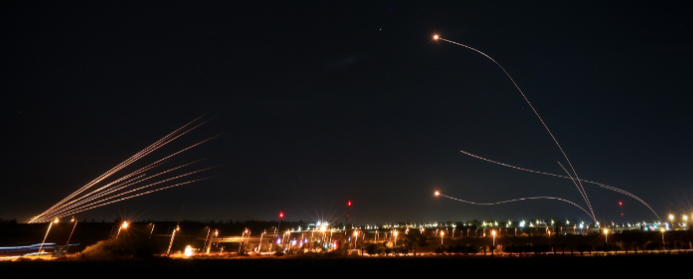
Israel confronts the most diverse and dangerous set of threats it has faced since the nation’s founding. Israel is fighting a war on seven fronts against Iran and its terrorist proxies in Gaza, Lebanon, the West Bank, Yemen, Syria, and Iraq. Iran funds and trains these terror groups while equipping them with growing arsenals of increasingly sophisticated weapons. All the while, Tehran is coming ever closer to developing nuclear weapons.
In Gaza, Israel continues its operations against Hamas to recover its hostages and ensure the terror group can never repeat its horrific October 7 attack in which it murdered over 1,200 people and took more than 250 hostages. In Lebanon, Israel is responding to Iranian-backed Hezbollah’s almost daily attacks. And Israel has faced fire from Iranian surrogates in Yemen, Syria, and Iraq during this period. Perhaps most notably, for the first time in history Iran attacked Israel last April with over 300 missiles and drones, followed by another attack in October with nearly 200 ballistic missiles.
The United States has taken dramatic action over many years to ensure our ally can meet these challenges. Most recently, in April 2024 Congress passed a $14.3 billion emergency supplemental aid package — helping ensure Israel will have the resources it needs to defend its citizens. Unfortunately, as the threats facing Israel continue to grow, Israel will need to develop new technologies, purchase more sophisticated weapons, and replenish its munitions stocks. Israel is a capable partner in a strategically important region, and it is in America’s national interest to ensure the Jewish state has sufficient resources to effectively defend itself, by itself.
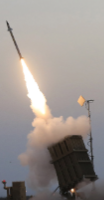
Israelis live under near-daily attack from rockets, missiles and drones fired by Iranian-backed terror groups. As these terrorist organizations acquire larger and more sophisticated arsenals, this danger continues to escalate. Iran continues to enhance its own ballistic and cruise missile capabilities which it used in the unprecedented attacks against Israel in April and October 2024. Its proxy Hezbollah maintains over 150,000 rockets and missiles, many precision-guided and able to strike anywhere in Israel. Iran also supplies Hamas, the Houthis, and Palestinian Islamic Jihad, terror groups that have targeted Israeli population centers.
With America’s support, Israel has developed and deployed an effective multi-layered missile defense shield — Iron Dome, David’s Sling, and Arrow. As the size and sophistication of threat arsenals grow, Israel must increase its stock of interceptors. Israel must also develop other means to intercept large numbers of missiles, including the Iron Beam directed-energy system.
Unmanned Aerial Vehicles, or drones, have emerged as a major new threat to Israel. Hamas used drones on October 7 to destroy Israeli surveillance systems and have since used drones to target Israeli troops operating in Gaza. Hezbollah has used drones to target cities and military bases throughout northern Israel and launched drones towards Israel’s offshore energy infrastructure. In July 2024, an Iranian drone flew over 1,200 miles from Yemen to strike a building in Tel Aviv. Iran’s April 2024 attack on Israel was the first major coordinated drone and missile attack in history.
Israel maintains a number of systems to detect and intercept drones, including many of the same systems that intercept incoming rockets. Israel also uses fighter jets to intercept larger drones. With drones becoming more sophisticated and common on the battlefield, Israel must develop and deploy more of these systems at a lower cost to intercept both long-range drones and short-range drone swarms. Israel and the United States must continue jointly developing key counter-drone technologies to handle the imminent threat American and Israeli forces face.
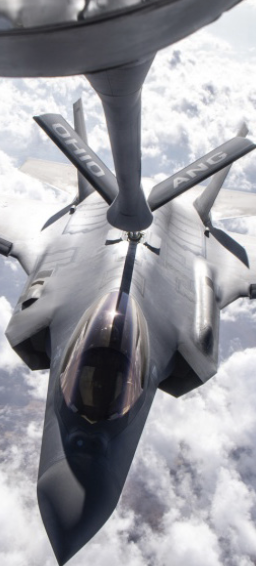
As Israel operates in hostile territory to tackle enemy threats, it faces an increasingly challenging environment. Hezbollah has acquired surface-to-air missiles. Iran has acquired advanced Russian anti-aircraft systems and is in the process of acquiring Russian fighter jets and attack helicopters. With attacks being launched from Iran and Yemen, the Israeli Air Force is being tasked with operating at distances further from Israeli territory.
Israel’s fleet of advanced American-made fighter jets, including F-15s, F-16s, and F-35s, is crucial to the country’s capability to defend against incoming enemy threats and project power at long distances. In the coming years, Israel will continue to spend billions of dollars to acquire additional F-35 and F-15 fighters — which will be upgraded with Israeli technology — KC-46 aerial refueling tankers, helicopters, cargo planes, and precision guided munitions. Israel must also upgrade air bases and defensive shelters to ensure its ability to operate while under attack from Iran, Hamas, Hezbollah, and other enemies.


Since October 7, 2023, the IDF has discovered over 1,500 terror tunnel shafts built under hospitals, schools, and homes in Gaza. This massive terror infrastructure includes 350 to 450 miles of tunnels, with over 5,700 entrance points. Hamas hid and tortured scores of hostages in these tunnels. Hamas also uses the tunnels to store and produce weapons. Hezbollah has also built a labyrinth of tunnels throughout Lebanon to store and launch weapons, move fighters, and evade Israeli aerial dominance.
The war with Hamas has shown that as long as America and Israel maintain air superiority, adversaries will move underground to evade detection and fight. Israel must continually develop new systems to meet the complex challenge of detecting, mapping, destroying, and maneuvering through these terrorist tunnel networks. Israel develops and shares key counter-tunnel technology with the Department of Defense and Department of Homeland Security, which work to advance this technology further — enhancing America’s own ability to deal with this growing threat around the world and at our borders.

Hamas and Hezbollah continue to receive advanced anti-tank guided missile systems from Iran and produce their own advanced weapons. Hezbollah has begun using new, advanced anti-tank missiles that can pierce heavy armor. Hamas terrorists have repeatedly used anti-tank munitions against Israeli tanks and armored vehicles. These systems pose a significant threat to troops on the ground as Hamas, Hezbollah, and other Iranian proxies escalate aggression towards Israel.
Israel has bolstered and improved its ground forces by developing and deploying heavyweight armored Merkava IV tanks and multiple high-tech armored personnel carriers — including the Israeli-designed and U.S.-produced heavy Namer armored troop carriers. Israel must equip these vehicles with unique and expensive “active protection” anti- rocket technology — such as the TROPHY system and Iron Fist – to defend Israeli troops from anti-tank rockets and weaponized drones.

Israel continues to cope with a host of evolving technological threats, such as Iranian cyberattacks and Hezbollah drone swarms. There will be more severe challenges in the future, as the evolving China-Russia-Iran strategic partnership refines its innovations in cyber, AI, hypersonics, robotics, and unmanned systems.
Israel is a global leader and innovator in the development of defense technology and has seen frequent success in the ability to counter emerging threats through innovation in artificial intelligence, cybersecurity, autonomous systems, and directed energy (such as Iron Beam). At a time when our adversaries are growing dangerously more emboldened and capable, it is a strategic imperative that America and Israel work together to develop warfare capabilities to meet the challenges of the future battlefield.
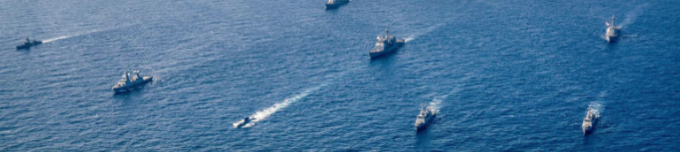
The Iranian-backed Houthis in Yemen have emerged as a significant threat to Israel, America, and global commerce. Since October 2023, the Houthis have launched missile and drone strikes at Israel from more than 1,200 miles away and repeatedly attacked maritime shipping vessels from over 55 nations in the Red Sea. These attacks have harmed global commerce and threatened the economies of nations like Egypt. They threaten to spark a broader regional conflict. At the same time, Israel must defend and maintain its energy security in the Eastern Mediterranean.
Israel must increase naval activity to protect maritime trade routes and energy resources, as well as to provide strategic depth for the IDF. Israel has begun exploring and using additional defensive hardware for sea missions, including ship-based missile defense systems, such as the “C-Dome” co-produced with the United States, as well as new surface vessels and submarines containing American systems.