Despite a ceasefire being in place, Hezbollah has launched more than 500 waves of attacks toward Israelis since April 16, including over 1,000 drones and more than 700 rockets in the past 10 days. The failure of the Lebanese Government to fulfill its commitment to “take meaningful steps” to prevent Hezbollah from attacking Israel, is forcing Israel to take necessary defensive actions to protect itself. The scale of Israel’s operations is directly tied to the scale of the threat and breadth of Hezbollah’s terrorist infrastructure.
The United States must continue to support Israel’s right to defend itself and confront Iran’s terrorist army, Hezbollah. The U.S. must also increase the pressure on the Lebanese government to fulfill its obligations to disarm the group.
Hezbollah has increasingly employed fiber-optic drones, which are resistant to electronic jamming, to target Israeli troops with deadly effect—11 Israeli soldiers and one civilian have been killed since the April 16 ceasefire began. This dangerous tactic is also being used by Russia in Ukraine, causing devastation across the country, and could pose a significant threat American troops stationed around the world.
The terror group is launching these drones from heavily fortified infrastructure across southern Lebanon, much of which is entrenched within civilian infrastructure.
Israel is taking proportional offensive actions to defend itself while its defense industry is rapidly working on a technological solution to these drones.
Following his election in January 2025, Lebanese President Joseph Aoun publicly stated that Lebanon would seek the disarmament of Hezbollah.
In August 2025, the Lebanese government approved a plan created by the Lebanese Armed Forces (LAF) to disarm Hezbollah south of the Litani River little meaningful action was taken to carry out this commitment.
Under the April ceasefire, the government of Lebanon agreed to “take meaningful steps” to prevent Hezbollah from “carrying out any attacks, operations, or hostile activities against Israeli targets.” The agreement also made clear that Israel preserved its right to “take all necessary measures in self-defense, at any time, against planned, imminent, or ongoing attacks.”
U.N. Security Council Resolution 1701, passed in 2006, required that Hezbollah be disarmed, and southern Lebanon demilitarized.

Israel is engaged in U.S.-led mediation efforts to achieve an agreement with Lebanon that would see Hezbollah disarmed. Following a third round of Israel-Lebanon talks on May 14-15, the U.S. State Department announced a 45-day extension of the ceasefire agreement.
Israeli officials have made clear that they have no territorial ambitions in Lebanon and seek only to ensure peace and stability along Israel’s northern border. Israeli Foreign Minister Gideon Sa’ar said unequivocally, “Israel has no territorial ambitions in Lebanon. Our presence... serves one purpose: protecting our citizens.
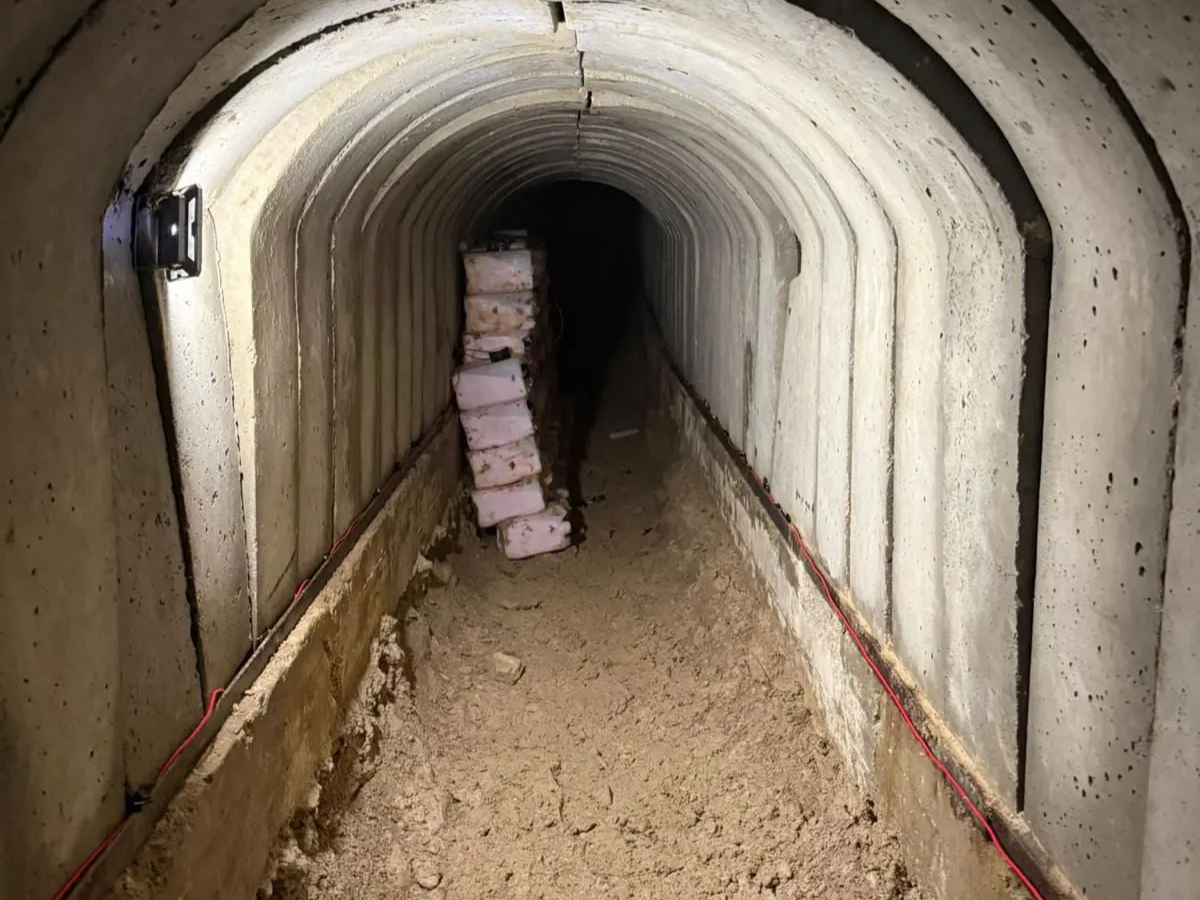
Throughout southern Lebanon, Hezbollah has constructed a maze of underground tunnels and bunkers to hide its weapons and fighters. In homes, mosques, churches, schools and hospitals, the terror group has embedded its terrorist infrastructure, just as Hamas did in Gaza.
Below are recent examples of what the IDF has uncovered in southern Lebanon

The United States must continue to support Israel’s right to defend itself, work to prevent Iran from reinforcing its terror proxy, and increase the pressure on Lebanon to disarm Hezbollah.